“I’ve always been a believer in helping and giving back. My family has always donated to causes we believe in, always tried to find ways to make a difference. But I never imagined advocacy would become such a huge part of our lives. When we first found ourselves thrust into the world of rare disease, advocacy was just a way for us to survive. Today, it’s so much more than that. It’s a personal passion for me, and a fundamental part of who we are as a family.
It all began when our youngest daughter Ema was diagnosed with autism. Because Ema was our fifth child, we were able to recognize pretty quickly as parents that her speech and overall development weren’t typical. After the autism diagnosis, though, my husband Lionel and I were convinced that still wasn’t the whole story. We could see in Ema’s eyes that something more was going on. We wanted further investigation, but we met a lot of resistance. We had to push and push for genetic testing. And, even after lab results showed a microdeletion on Ema’s X chromosome, it was only through talking to other parents, through independent research, and through relentless advocacy that we were able to get her tested for Rett syndrome. It wasn’t on any of the doctors’ radars. No one in Manitoba had ever seen a case of Rett syndrome that presented like Ema’s, because she was still so mobile, active, and dextrous.
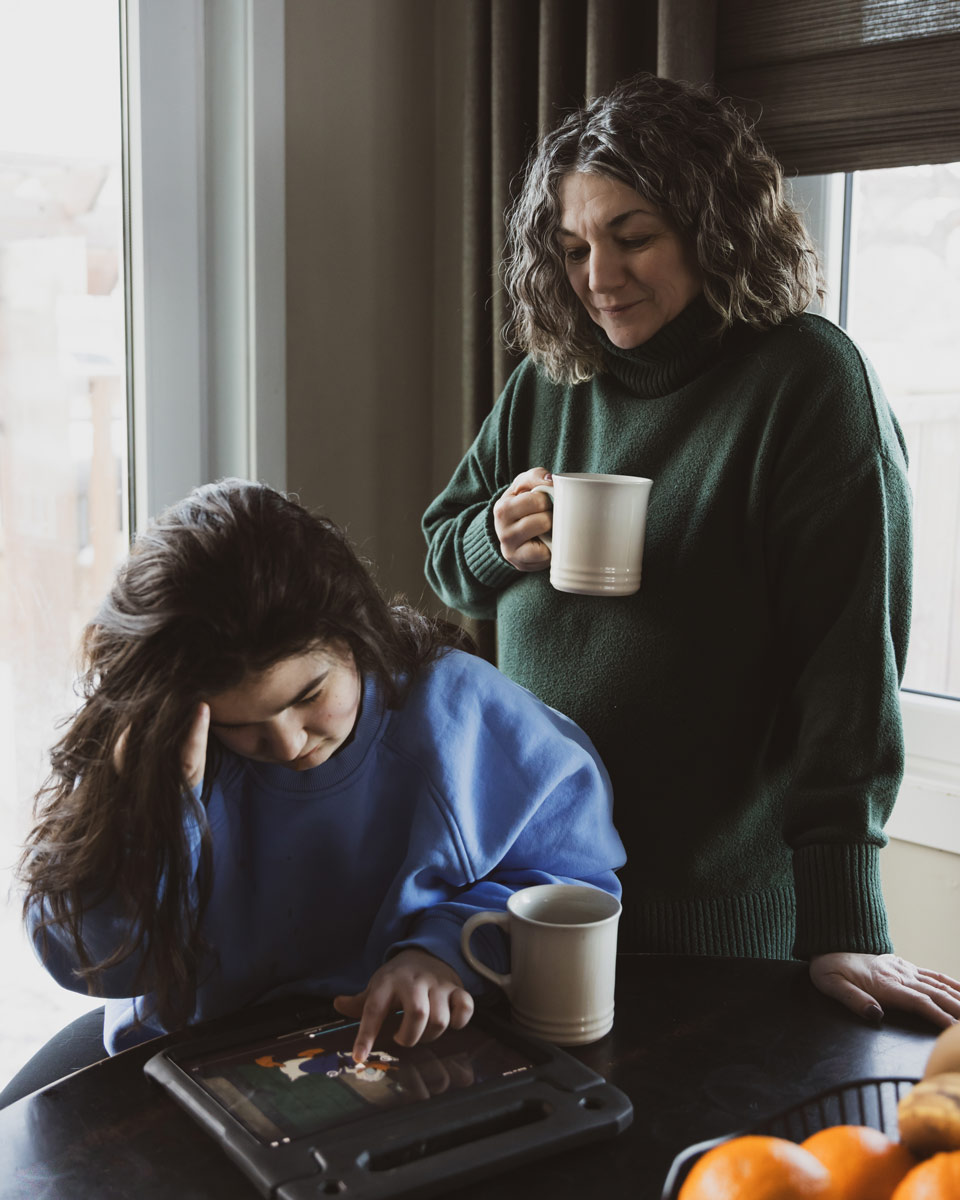
Just before Ema’s fifth birthday — after years of lost milestones, seizures, and other severe health issues that left our family barely able to get through the day — we finally got the Rett syndrome diagnosis. They gave us a single sheet of paper and were like, “Here’s everything we know about Rett syndrome.” From the moment I was handed that pamphlet, I knew there was no way I was ever going to let another Manitoba family be in the same situation, alone with no information and nowhere to turn. I went home that same day and reached out to the Manitoba Rett Syndrome Association (MRSA).
Over the last 12 years with the MRSA — as a member parent, a volunteer, a board member, and now as president — I’ve fought to make life easier for those with Rett syndrome and their families. We advocate, spread awareness, support research, provide community, and work toward a future where people with Rett syndrome are seen for the fully capable people they are. We work toward a future where there’s a cure to end this disease.
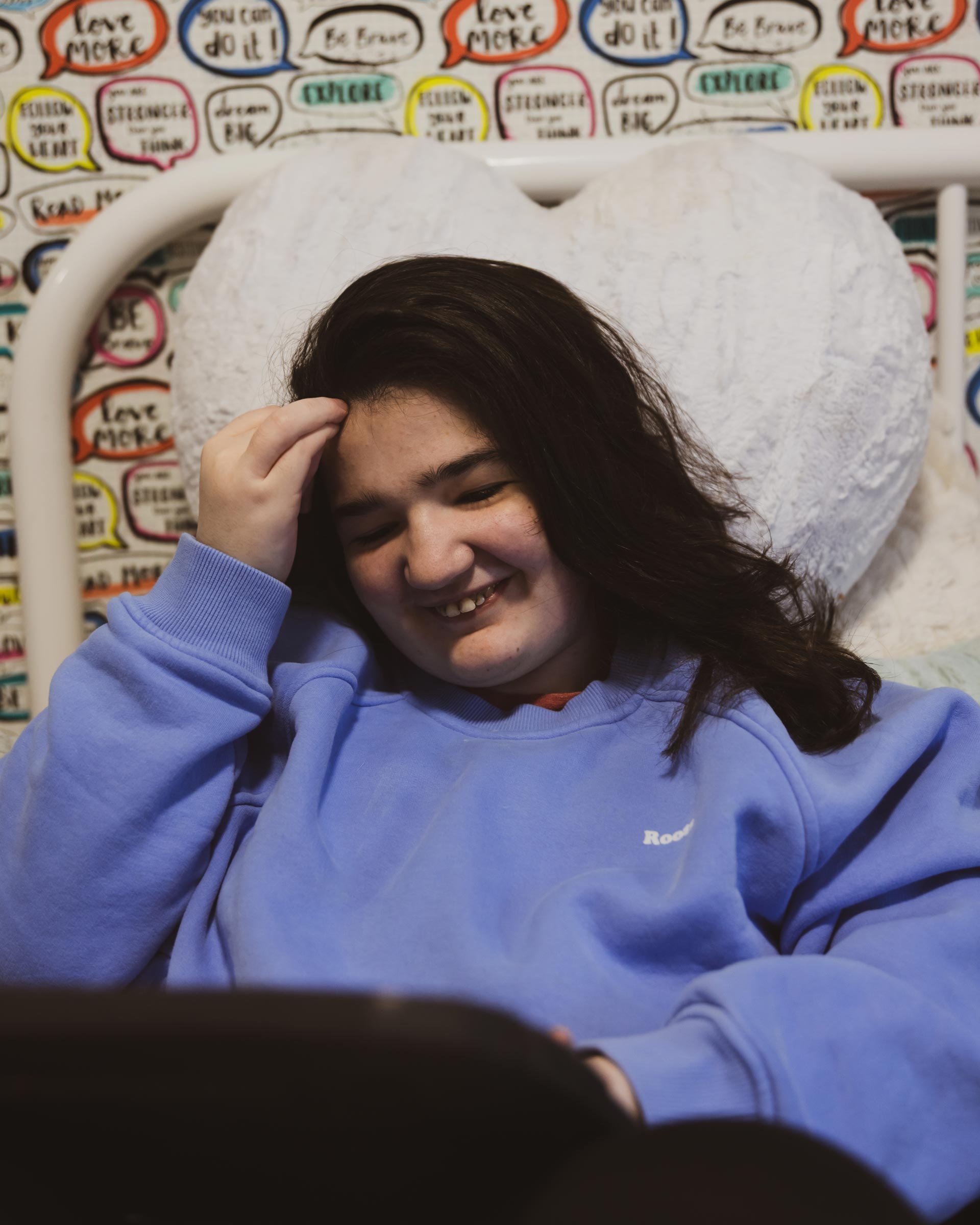
I do the things I do for Ema, 100 percent, because I want her to have the best life she can possibly have. I want her to have all the same opportunities our other kids have had. She deserves them. But the thing that’s made this work take on such a larger meaning for me is the knowledge that making the world a better place for Ema also makes it better for other families, not only with Rett syndrome but with all types of rare diseases and disabilities. The people I’ve met along the way, and the stories I’ve heard and the journeys I’ve witnessed, have changed the way I see the world.
And, one small step at a time, we’ve changed the world, too. Things have improved so much for families with Rett syndrome, even just in the time since Ema was diagnosed. There are new medications, more supports for parents, wider awareness, and better access to augmentative and alternative communication. There’s always going to be more work to do, especially when it comes to equal access for rare disease drugs, but it’s so motivating to know that things can get better. That’s my why. Through all the struggle and frustration, it’s the wins — even the small ones — that make advocacy worth it. It puts a smile on my face every day.”