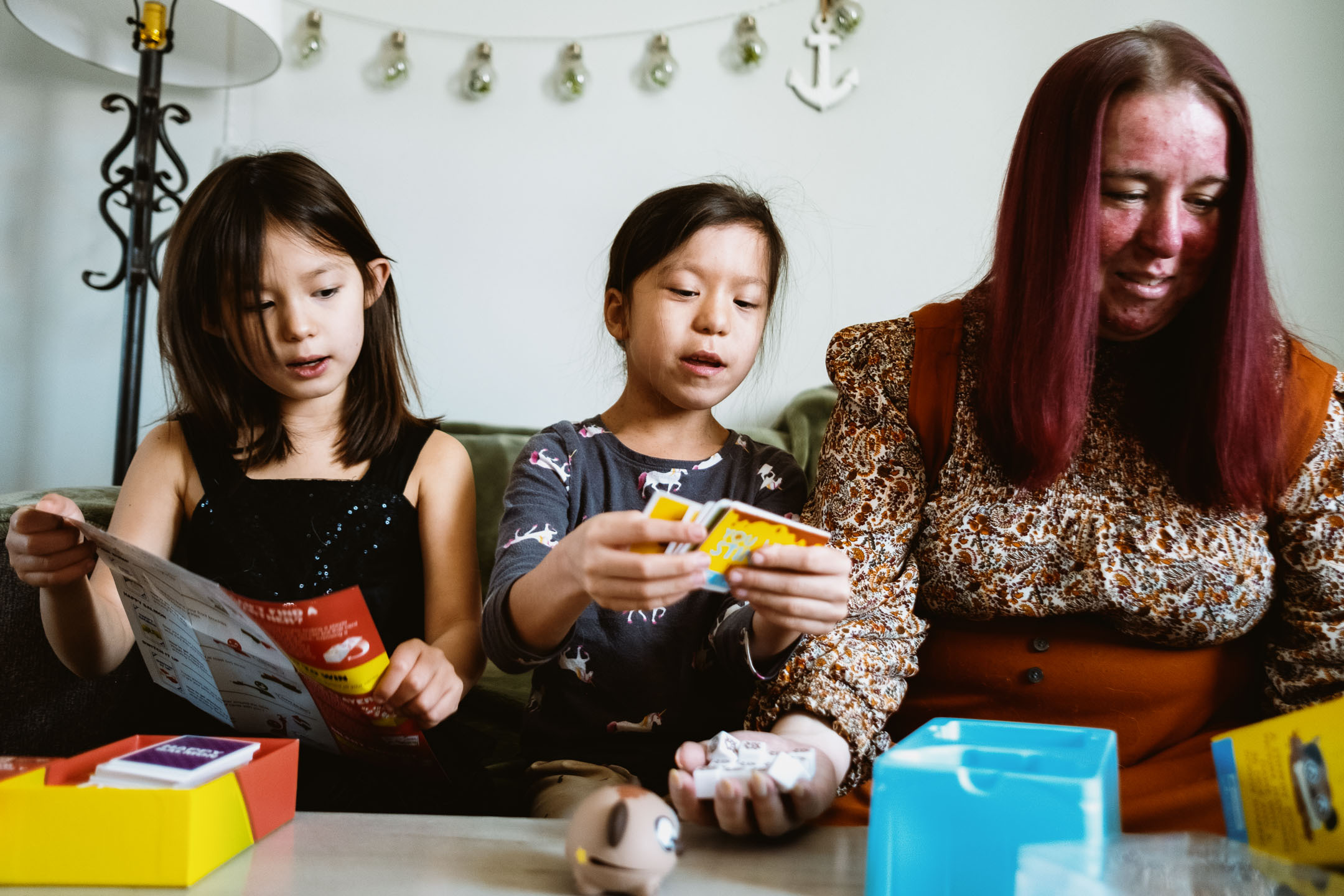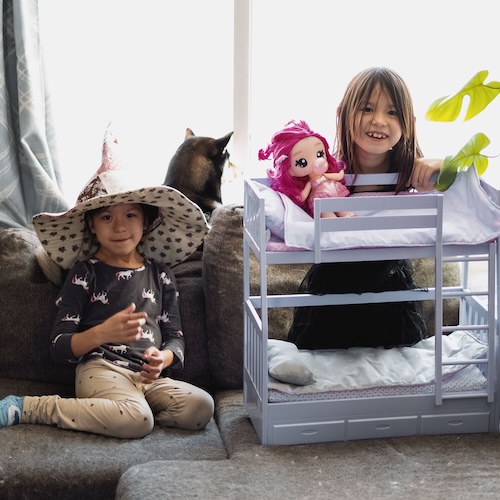

“We’d just moved back to Canada from Japan and one of the twins, Rei, had a bad cough, so we took her to see our GP. Rei and Lia were three years old and just being introduced to the Canadian health care system for the first time.
The cough wasn’t a big deal. But the doctor noticed how many café au lait spots Rei had all over and asked if any doctors in Japan had ever mentioned them. They hadn’t. I’ve got so many freckles myself, I hadn’t thought anything of it either. We were referred to a dermatologist and she immediately said, ‘Yeah, that’s a lot of spots.’
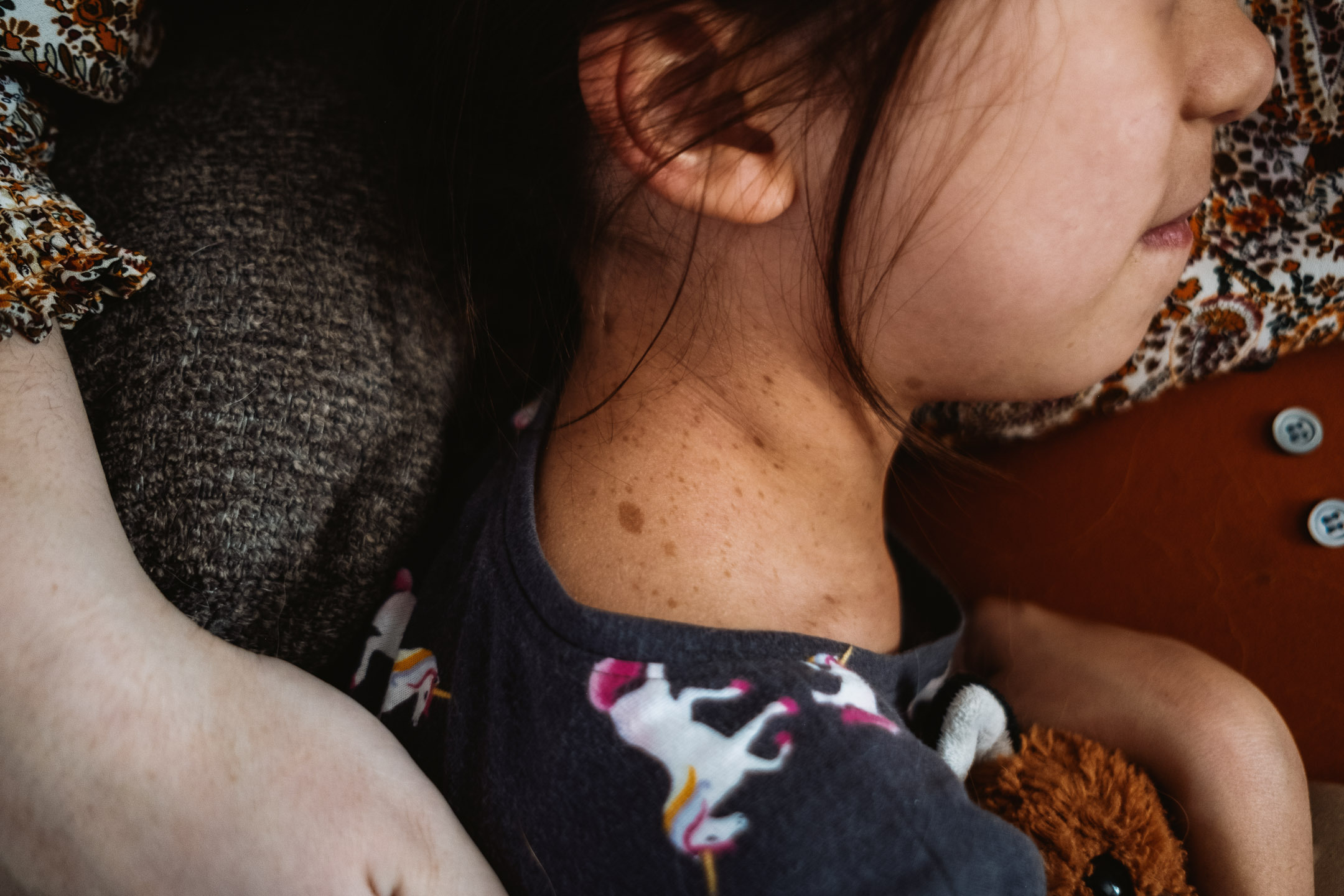
The dermatologist also noticed one of Rei’s legs was a little bowed, and that was enough to recommend genetic testing. Testing took forever but eventually confirmed neurofibromatosis type 1 (NF1), a rare condition that causes not only skin pigment changes but also nervous system issues.
It was a lot to deal with. And then Rei’s twin sister Lia began to have these persistent stomach aches. So we brought her to the doctor and he noticed her spleen was enlarged. That meant more genetic testing, another long delay, and then a diagnosis of thalassemia. Now both of them had all these appointments. Through it all I tried to keep life as normal as I could for these two sweet little girls.
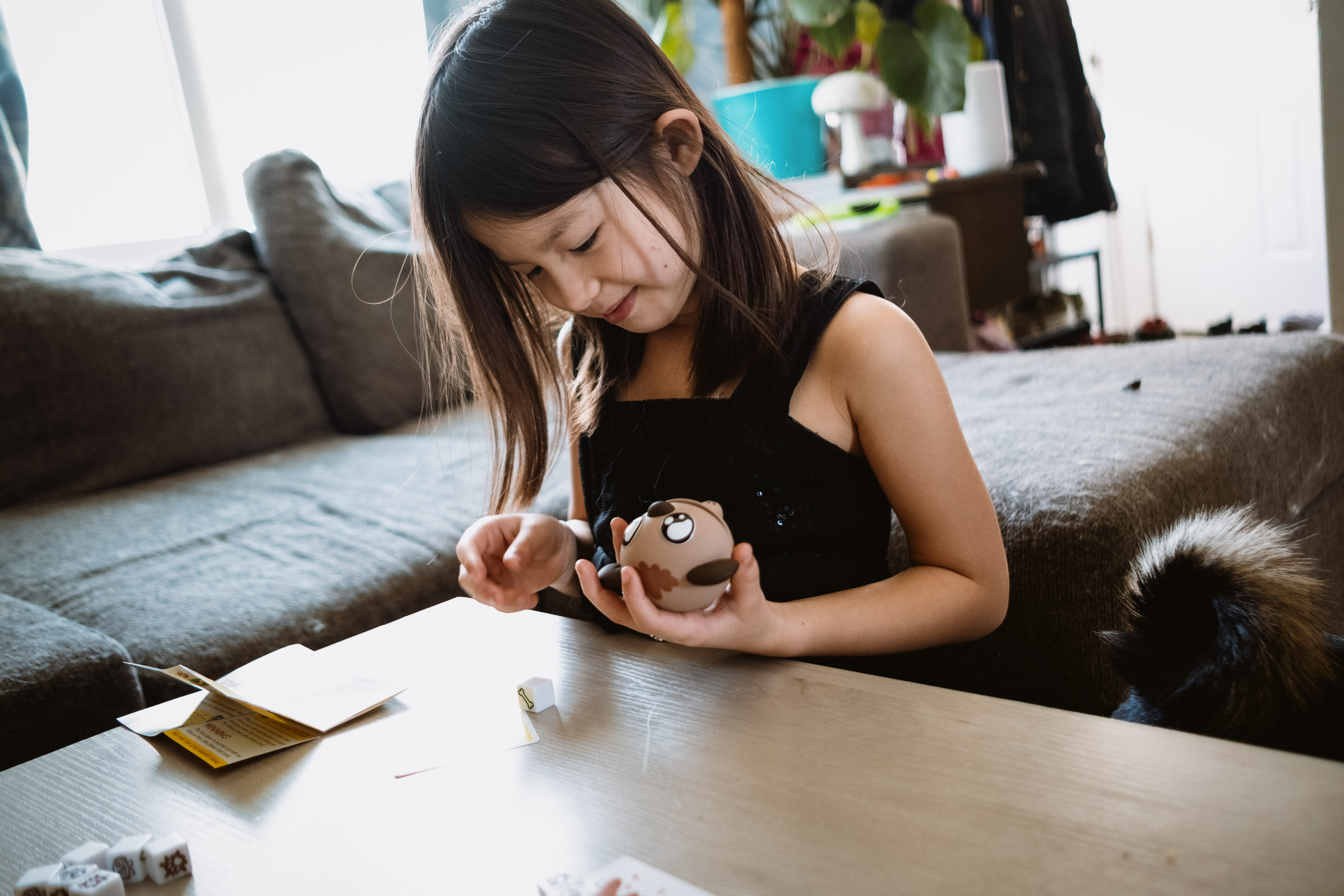
Rei and Lia are seven now, and they’re unfortunately starting to become aware of the fact that their experience is different from that of their friends. They compare appointments and they know their classmates aren’t seeing doctors anywhere near as often.
They mostly take it in stride, though. They’re both so tough in their own ways. Rei is the most determined little girl you’ll ever meet. She wants to learn how to skate, even though it’s not the easiest thing with some of her fine motor issues. But once she focuses on something, she never gives up. And Lia is an absolute spitfire.
I wish the diagnostic process had been easier. I wish we had more answers than we do, even four years after that first appointment. We’ve learned to live in uncertainty, and we’re mostly managing it, but I look forward to maybe one day feeling like the hard part is behind us.”