“I’m going to say right up front, getting diagnosed with HIV is scary as hell. I panicked. And it doesn’t help that there’s so much misinformation.
Like, when I first got diagnosed seven years ago, I was terrified to go on meds. Basically everything I knew about HIV meds dated back to the ’80s and ’90s, and I’d heard so many side effect horror stories.
But, as terrifying and difficult as living with HIV might be in the beginning, it gets easier. You get into the swing of things, you educate yourself, and soon you realize it’s not as scary as people think. The meds are so much more advanced now, and they’re still advancing. I take one pill a day, I think of it like a vitamin, and that’s it. That one pill is enough to make my viral load undetectable and therefore untransmittable. It would be very easy to live a normal and healthy life, if only we could do something about the stigma.
Unfortunately, all the self-educating in the world doesn’t do anything about everyone else’s lack of education. As a supply teacher, when I’m working in schools, I hear misinformation and stigmatizing jokes all the time, from students and also from teachers. I’m always stuck deciding whether to bite my tongue or whether to put my emotions and safety on the line to educate someone. It’s exhausting.
And then, within the gay community in Canada, there’s a whole other education problem. We’re so lucky that medical advances have transformed HIV into a chronic disease and given us such strong tools to prevent transmission of the virus. But it sometimes feels like gay people in Canada think that means HIV is over. Like, no. HIV is still here.
I’m still here. We’re still here.
The one place where I feel truly at home is in the HIV community. I’ve found so much meaning working with groups like Asian Community AIDS Services, and especially helping other people living with HIV tell their stories. It’s been so healing, and it’s helped me feel like I’ve risen from the ashes of my diagnosis. Seven years ago, I thought my life was over. Today, my life has never been more fulfilling.
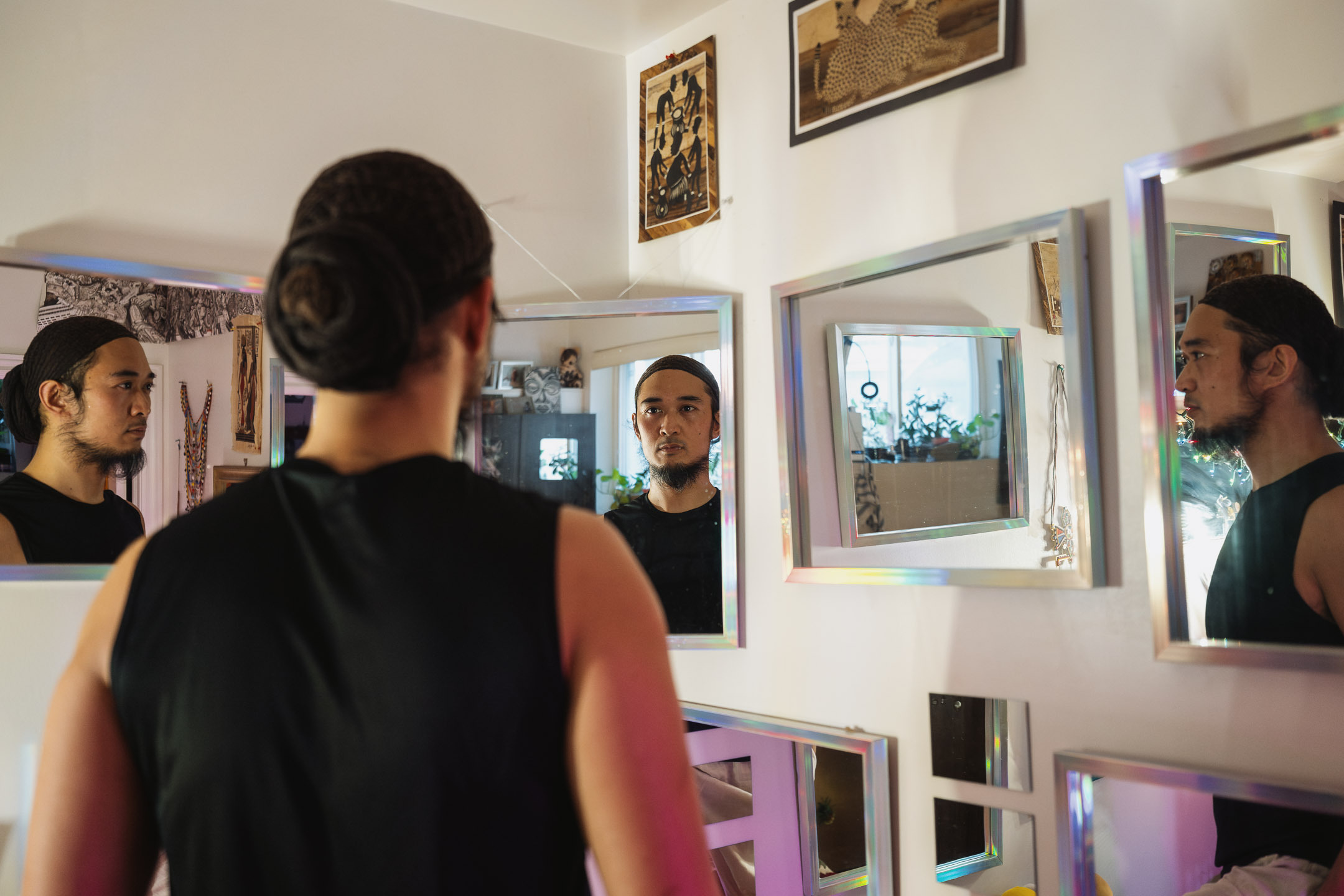
So much of my lifelong experience of mental health is tied up in trauma and just never feeling like I was good enough. There’s always been something inside me saying: ‘You are unlovable.’ It takes a lot of work to quiet that voice, especially as a queer, Asian, and HIV-positive person in Canada. Because the way our society views HIV is a constant reinforcement of those feelings I’m already struggling with.
Like, I’ve had body dysmorphia for many years, which has led to an ongoing battle with anorexia and exercise bulimia. At the core of a lot of eating disorders is that old feeling of not being good enough, and HIV plays right into that. As soon as I was diagnosed, I became labelled in the gay community as undesirable. That’s an unfortunate reality. I wish I could say it was all in my head. But try putting that you’re HIV-positive in your dating app profile and see what happens.
And so, because I couldn’t control my HIV status, I started thinking about the things that I could control. That’s when a familiar voice piped up and told me I needed to look perfect if I was ever going to be loved. I needed to be beautiful, which meant being as thin as possible. It makes me sick just to say that, because of course you don’t have to be thin to be beautiful. But that’s what goes on in my mind when the trauma takes over.