“‘You’re fine. You’re normal. It’s just your menstrual cycle causing issues. Go home.’ When you keep hearing things like this from doctors, it’s no wonder it takes women so much longer to get diagnosed with basically anything. Every month, my symptoms would get worse just before my period, but doctors dismissed it as being unrelated or ‘just a menstrual thing.’ It wasn’t. It was Parkinson’s disease.
There’s so much gaslighting that happens to women with this disease, not least because everyone still thinks of it as an old man’s disease. I was 31 when I was diagnosed. I was just about to buy a home with my soon-to-be husband. Five years later, we had my daughter. Pregnancy was awful. The symptoms kept getting worse as my due date approached. I had an external tremor in my left hand, but the internal tremors felt like every organ and bone in my body was shaking apart. Postpartum was even harder. I had to stop breastfeeding because every time I did, the symptoms came on stronger. All these ways Parkinson’s specifically affects women have barely been studied. Good luck getting a doctor to take your concerns seriously, thoroughly investigate the underlying issue, and work toward a real solution for you rather than just prescribing birth control and antidepressants.
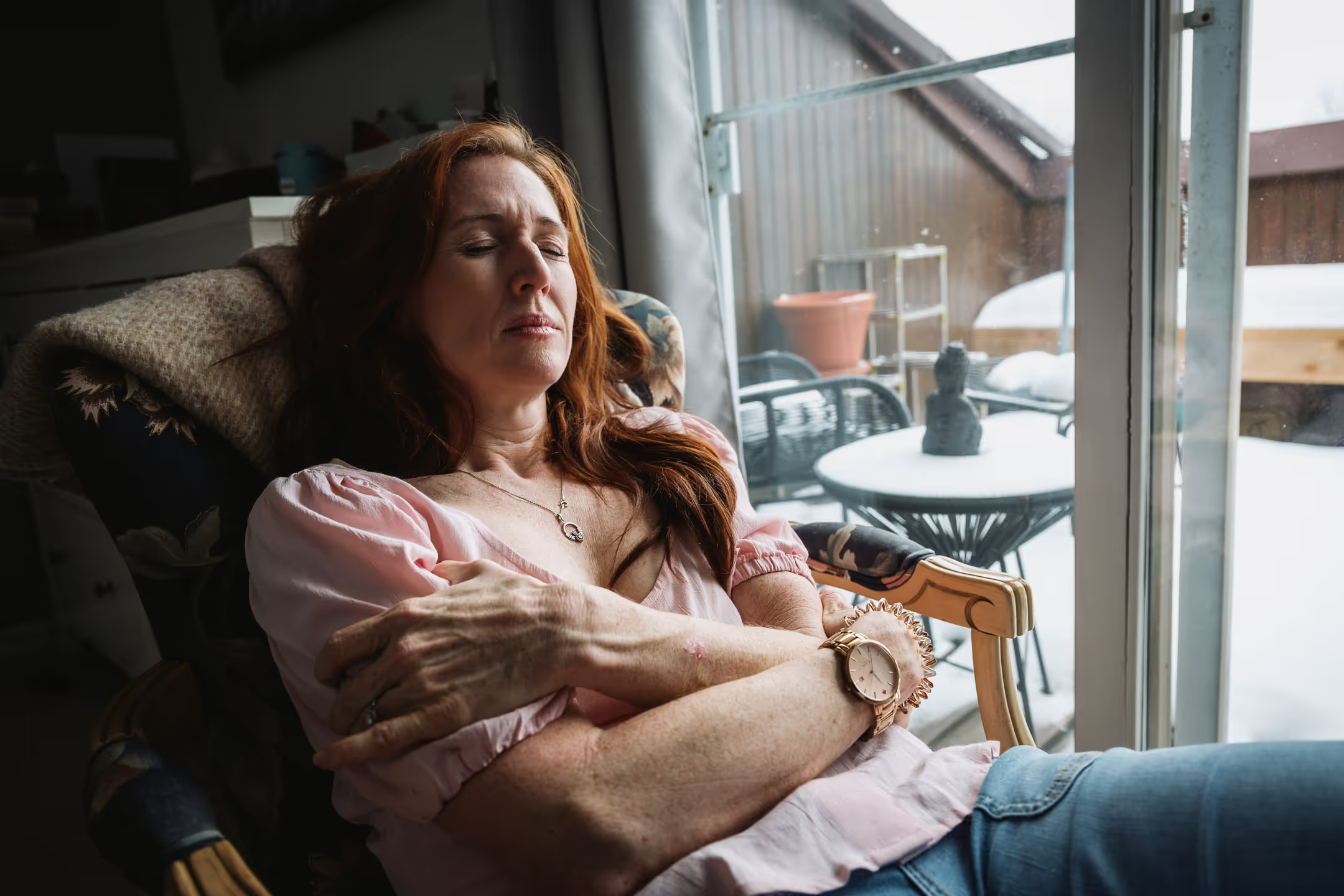
Now I log and document every symptom every day so that when I go to the doctor, I can lay out all the data. I can say, ‘Look, this is what happens on day eight of my menstrual cycle, every month. This is what happens on day 18. It’s not in my head. It’s my life.’
Until six months ago, I was working full-time and leading a team of 10. Now I’m on disability leave, reliant on my husband’s income and the assets we’ve built. If our financial security were a little more tenuous, this would be even harder.And it’s already so hard. With my tremors, I need help all the time. I can’t prepare meals on my own. I can’t do laundry. I can’t do stairs. I can’t take my daughter to school. I’m lucky if I can manage to brush her hair.
And because the progression of Parkinson’s in women has hardly been studied, there are no real solutions for me as a woman managing this condition.
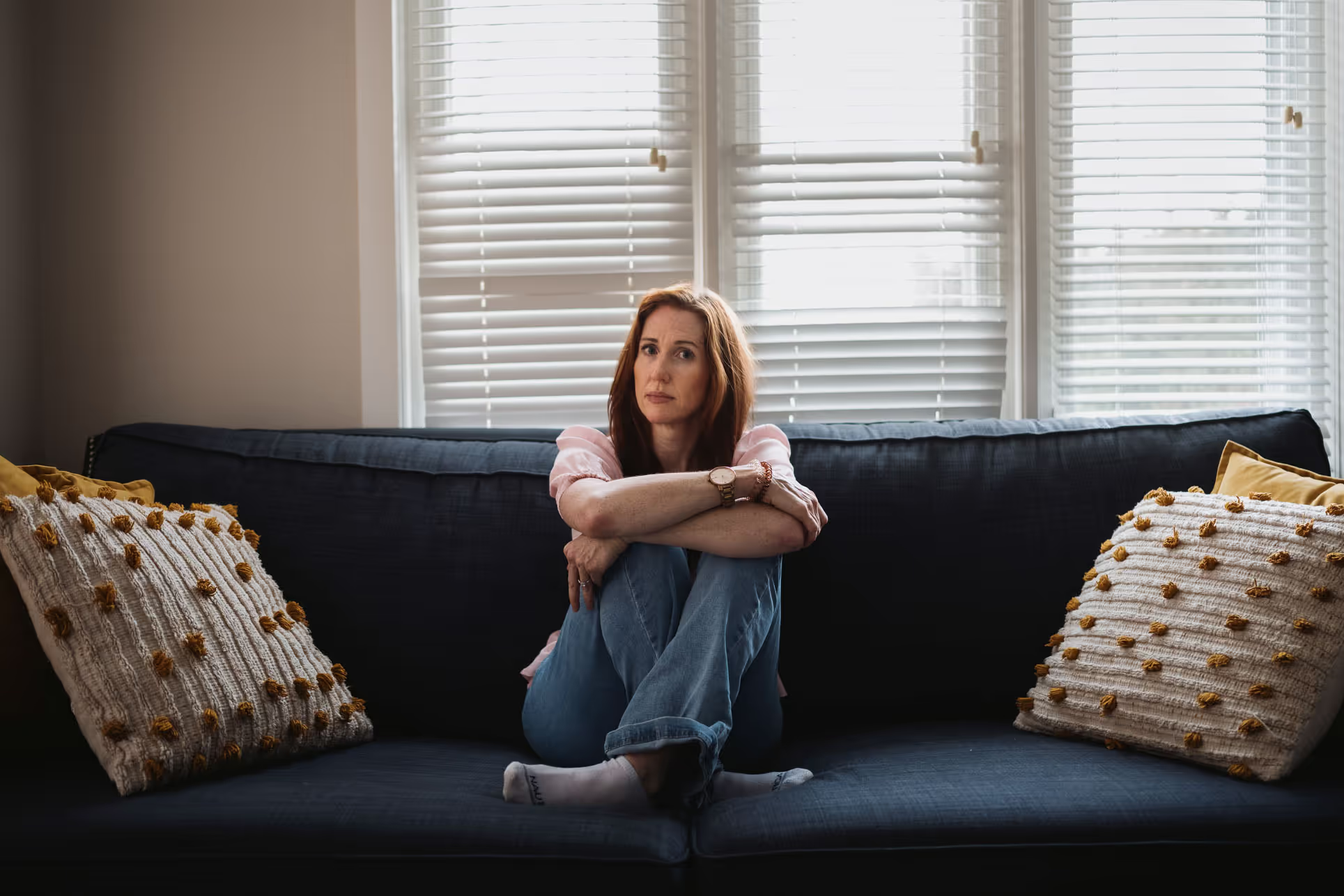
When I was pregnant, the symptoms of my young-onset Parkinson’s disease were just starting to progress to the point where I couldn’t hide my tremors any longer, even though I still wasn’t publicly out about my diagnosis. I remember being at a brunch party and this little girl coming up to me. ‘Why is your handshaking?’ she asked. ‘Are you a shaky lady? Shaky lady, shaky lady.’
It crushed me. I remember crying uncontrollably that day as the weight of it hit me. I had no idea how I was going to deal with my disease as a mother. It devastated me to think of how embarrassed my daughter was going to be to have the shaky lady as a mom. I remember apologizing to my husband after our daughter was born and my symptoms only got worse. I’m so sorry, I didn’t know it would be like this. I felt so guilty that we had brought a child into this world under these circumstances.
And then, of course, she was perfect. She’s a very smart girl, my Bridget, so bright, and she picked up on everything so quickly. The day she finally asked me why I was so wiggly, explaining it to her was so much easier than I’d expected. She’s five years old now and when I’m having a dyskinesia attack, she recognizes it straight away. She’ll come up and hug me and snuggle me and tell me it’s okay. The oxytocin those hugs release in my brain is the best medicine.