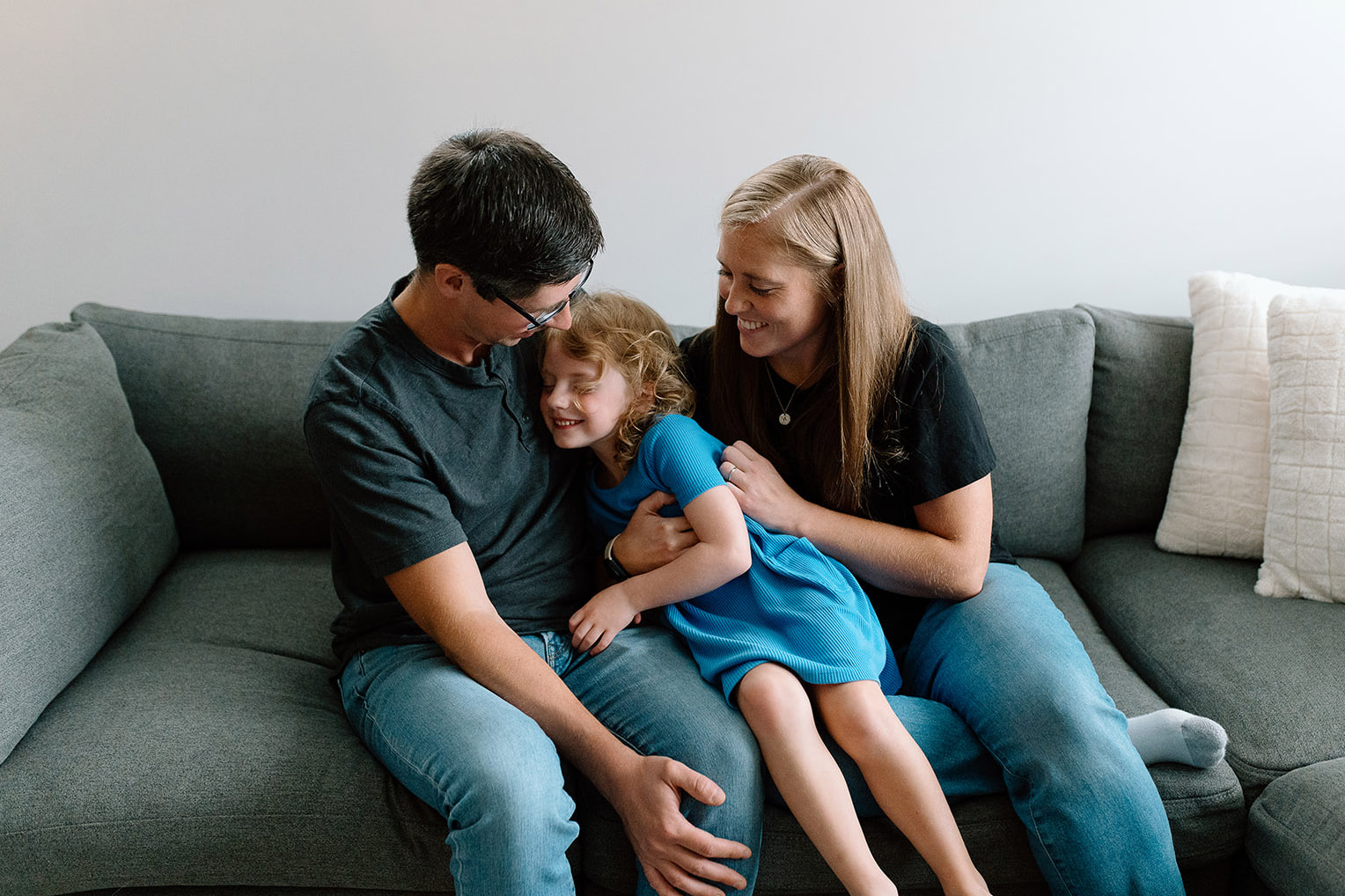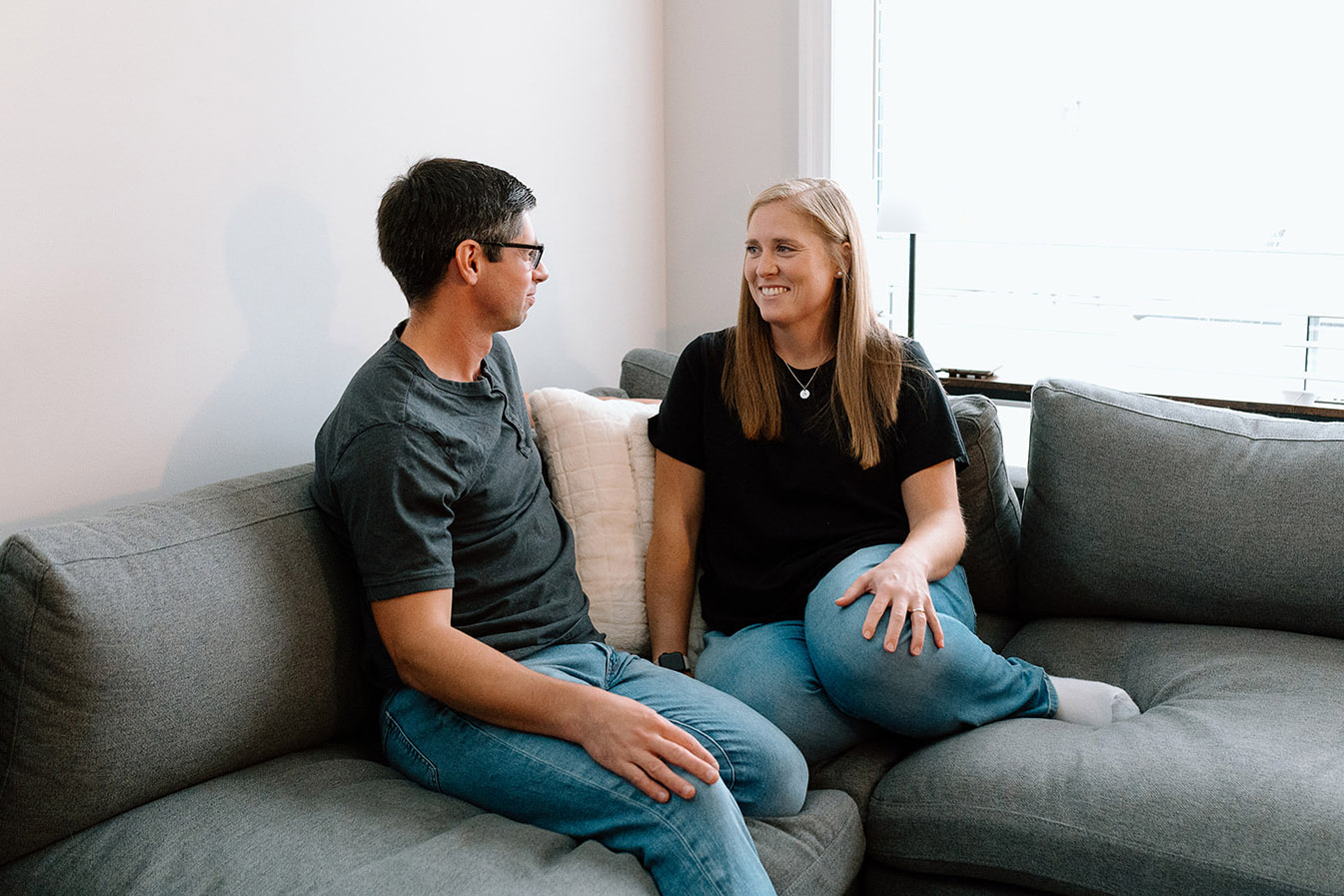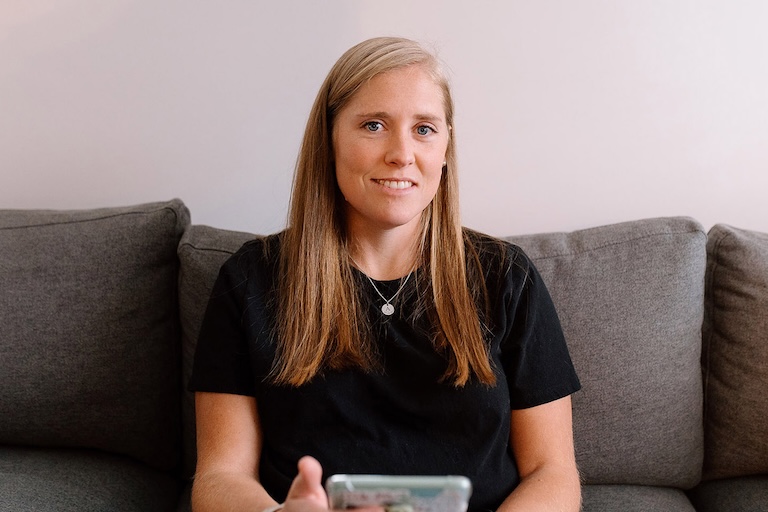

“We’d always wanted to have two children. As an elementary school teacher, I was already surrounded by children every day, and all I wanted was a couple of my own. My husband Cody and I had a whole game plan. So, when I got pregnant, it felt like everything was coming together.
Then a routine urinalysis picked up high levels of protein. The doctors said everything they were seeing was aligned with some kind of kidney problem, but they couldn’t investigate it properly while I was pregnant. Let’s get you safely through this pregnancy, then we’ll figure it out.
I had to be induced a month early, thanks to a bunch of complications that, in retrospect, are all associated with kidney disease. It was awful. I had preeclampsia. My blood pressure was scary high. My legs were so swollen from edema that they actually split open. I had to have a blood transfusion. The birth was thoroughly traumatic. Four months later, I was diagnosed with MPGN.
Membranoproliferative glomerulonephritis. It’s a mouthful. Super rare and not anything I’d ever heard of. Without effective treatment, it often leads to complete kidney failure.
Membranoproliferative glomerulonephritis (MPGN) is a rare disease that leads to the inflammation and damage of tiny filtering units in the kidneys called the glomeruli. Damage in the glomeruli can lead to blood or protein in the urine, foamy urine, swelling, hypertension, and even kidney failure. MPGN is subdivided into two main categories: immune-complex-mediated glomerulonephritis (IC-MPGN) and C3 glomerulopathy (C3G).
Learn more about IC-MPGN and C3G from our Q&A with Dr. Jocelyn Garland.

DID YOU KNOW?
It was the most heartbreaking time to get sick. My daughter was my everything, and every maternal instinct was telling me I had to put her first no matter what. But my own health made that impossible. I could barely get out of bed. I couldn’t breastfeed. I had all these doctors’ appointments. And I was on a constant rotation of medications with side effects that just made things harder. I couldn’t sleep. I couldn’t eat. I couldn’t function. Everything I felt like I should be doing as a new mom, I just couldn’t.
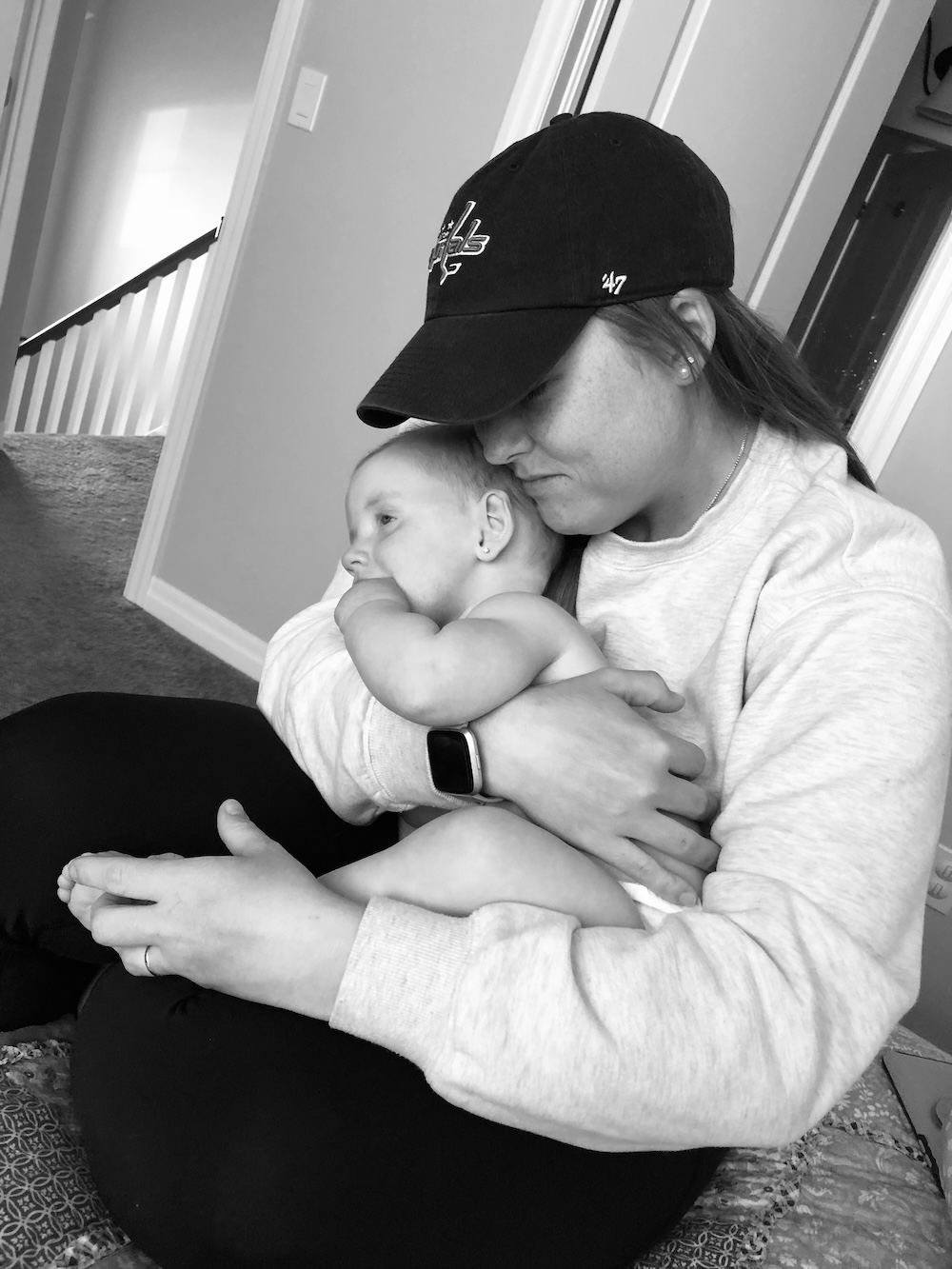
Hard as it was, I learned I had to put myself first or I wouldn’t be able to care for my daughter. Like in the airplane safety video: put on your own oxygen mask before helping someone else with theirs. My husband was an actual lifesaver through all this. Just a superhero. He took on everything and did it with incredible grace. My parents are also right around the corner, and all of our friends and coworkers have been so understanding and helpful. We’ve been really lucky with our support system. I can genuinely say I’ve never felt alone in this, even though I wish I’d been able to connect with another young mom going through the same things I am. Or maybe another schoolteacher. But this is an ultra-rare disease and there’s no organized community in Canada, so I haven’t been able to find someone whose experience really parallels my own struggles as a teacher and mom.
“I needed to find a way to treat my disease and still be the person I wanted to be.”
Teaching is a high-stress job even at the best of times, and it was particularly overwhelming coming back from maternity leave freshly immunocompromised. Classrooms are a Petri dish. That first year, I got hand, foot, and mouth disease by Thanksgiving. Then I was out with COVID for a month. It was suggested at one point that I might want to find another career. I don’t want to find another career. I love being a teacher.
I needed to find a way to treat my disease and still be the person I wanted to be. Even though my kidney function was staying pretty stable, it was terrifying to know that, in a few short years, I could be needing dialysis or a transplant. That’s a hard thing to wrap your head around, especially as a mom. It really emphasized how high the stakes were in the search for a treatment that would work and keep working.

I started dedicating every summer break to trying different treatments. There was a lot of, oh, this seems to be working. No, wait, maybe not. Or, this one has side effects that are going to make teaching in the classroom difficult. I really had to learn to advocate for myself and speak up. I had to know when to say, whoa, whoa, whoa, this isn’t working for me. I do not feel well. I can’t take care of my child. I can’t go to work. There has to be an alternative. This is my life, not a cookie-cutter situation. We all have different responsibilities and priorities, and our care needs to reflect that.
After years of frustration and persistence, last summer’s “let’s-give-it-a-go” medication finally seems to be the one that is working. It’s funny, because I don’t really feel any different now than I did before. I personally still have the low energy levels and the general feeling of blah that have been the constant hallmarks of this disease. But when they check the levels in my blood and urine, my health team is like, yes, we’re definitely going to stick with this one.